How Novelists Research and Write Convincing High-Stakes Scenes

A card game on the page rarely feels like a card game in real life, and readers who play notice the gap immediately. Dialogue that leans on movie clichés, chips that clatter for no reason, and tension that arrives on cue instead of building scene by scene: these are the small failures that pull a reader out of a story.
Writing a high-stakes scene that works takes more than imagination. It takes research, patience, and a willingness to sit somewhere uncomfortable long enough to learn what the moment looks like.
Some of that can be learned from other novels. Most of it cannot. The details that make a scene feel lived-in tend to come from time spent away from the desk, watching people play for real money and real consequences.
The Cost of Getting It Wrong
Genre readers are often players themselves, and a scene that gets the small mechanics wrong rarely survives their scrutiny. A handful of details cause more trouble than any other:
- A betting round that plays out in the wrong order, especially across the multiple streets of a poker hand.
- A blackjack dealer who hits on seventeen when house rules call for a stand.
- A baccarat table where the sequence of bets and the dealer’s routine do not match how a real shoe runs.
- Chip sounds, table chatter, or dialogue borrowed straight from a movie instead of a real room.
Having just one of these mistakes might not ruin a novel. But together, they quietly undermine a reader’s trust in everything else the book claims to know. Novelists who write these scenes well tend to treat the table the way a war novelist treats a battlefield, refusing to guess at the geography.
What the Room Sounds Like
Before a single line of dialogue gets written, most authors spend time simply watching. A card room has its own soundtrack: the shuffle, the low murmur of side conversations, and the specific silence that falls over a table when a big bet lands. None of that comes from imagination alone, and a writer who skips this step tends to reach for the same handful of borrowed images every other novelist already used.
Writers who cover this territory often sit at a table for an evening with a notebook or watch hours of recorded play, cataloging the small, unglamorous details a script would cut. Some go further and play the games they are writing about. A novelist working on a heist plot or a tense card-table showdown might explore the baccarat games in person or online to study the rhythm of a real betting round, rather than reconstruct one from memory of a film.
That firsthand pace — how quickly a hand moves, how long a player hesitates before a big call — is hard to fake convincingly without having lived through some version of it. Even a single session at a table tends to reveal a dozen small habits a writer would never have invented alone.

Pacing a Hand Like a Scene
In well-written gambling stories, the pacing on the page is often very similar to the pacing at the table. Many new writers don’t realize this. A hand builds slowly through the early rounds of betting, then compresses into a handful of seconds once the stakes become visible.
Good scene writing follows the same shape. Longer, looser sentences work while the tension is still building, then short, clipped ones once the pressure peaks. A skilled novelist will often slow down right before the reveal rather than speed up, because the pause is what makes a reader hold their breath.
Research trips help here too. Watching real hands unfold shows a writer where the dead time sits: the stretch between a raise and a call where nothing visible happens but everyone at the table is recalculating. Written well, that stretch can carry more tension than the reveal itself, and it rarely shows up in a scene the writer only imagined.
A useful test: read the scene aloud. If every sentence lands at roughly the same length, the pacing is flat, no matter how high the stakes are supposed to feel on the page.
The Language Players Really Use
Card-table dialogue fails fastest when it sounds written rather than spoken. Real players talk in fragments, lean on house-specific slang, and rarely narrate their own hands out loud the way movie characters do.
Researchers who study emotional and social pressure at the table have found it shapes decision accuracy about as much as the cards themselves. That is one reason experienced novelists let a character’s state of mind, not just the hand in front of them, carry the tension of a scene.
Tells Are Quieter Than Fiction Suggests
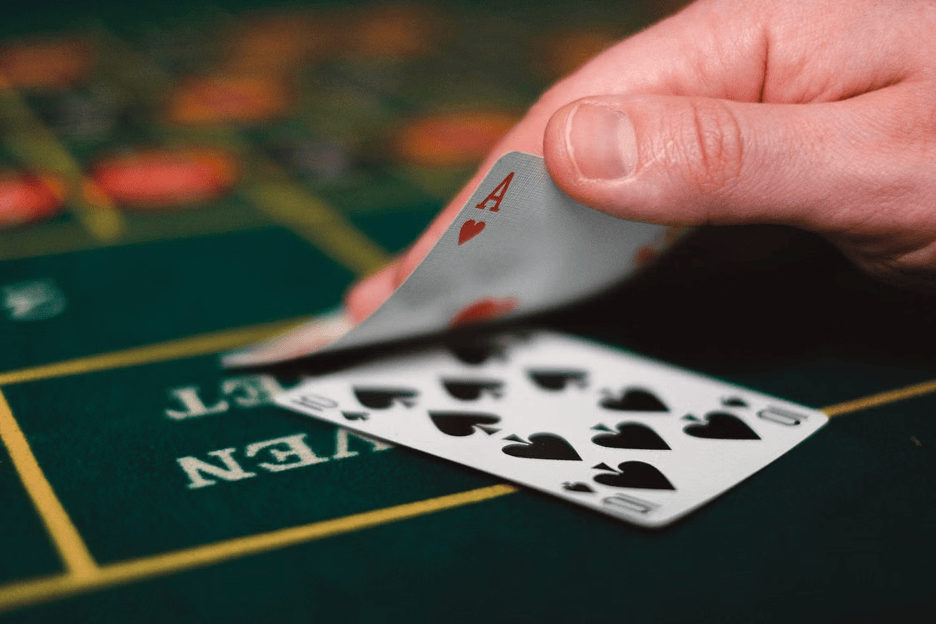
Fiction loves a dramatic tell: the twitching eye, the shaking hand, the character who cannot help but glance at their cards. Real tells tend to be smaller and easier to miss, things like a shift in how fast someone stacks their chips or a slight change in tone on the word call.
Good novelists learn to write tells a reader catches on a second read, not tells that announce themselves the first time.
That restraint is really a specific case of a much older habit. Long before card tables entered fiction, novelists were already using small, concrete details — a gesture, an object, a shift in light — to say what a character would never say out loud. A closer look at how literature builds meaning through detail shows the same instinct at work in a courtroom or a quiet garden scene as in a hand of cards: the telling detail does work dialogue cannot.
What Research Buys a Novelist
None of this research turns into a scene on its own. A writer still has to choose which details matter and cut the rest, or the scene turns into a transcript instead of a story.
What good research buys is confidence: the small, correct choices that let a reader trust the bigger, invented ones. A high-stakes scene works when the reader believes the room, even if they have never sat in one, and that belief is built one accurate detail at a time.