What Makes a House Feel Like Home? The Details That Shape a Space
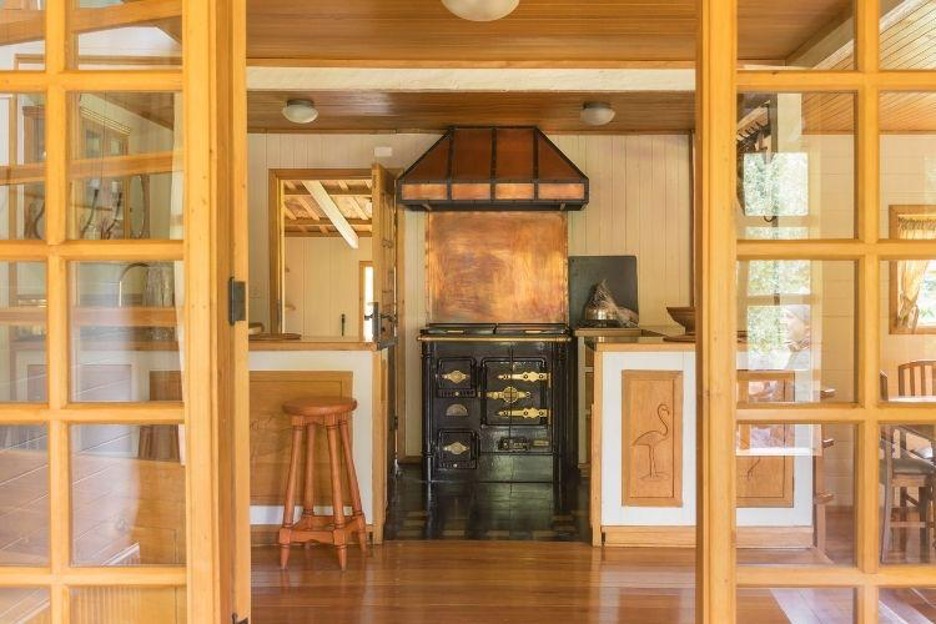
A house can be impressive on paper and still feel strangely impersonal. Floor area, postcode, and specification matter when buying or renovating, but they don’t fully explain why some rooms invite people to settle in while others feel temporary.
Environmental psychology has long treated “home” as more than a physical structure. Sixsmith (1986) identified personal, social, and physical dimensions to the experience of home, while recent research found that people who feel more attached to their homes also report a greater sense of meaning in life (Krause et al., 2026). Homeliness isn’t simply a decorating style. It develops through the relationship between a space and the people using it.
Start With Light, Privacy, and the Window
Natural light has an immediate effect on how a room is experienced. In a randomised experiment involving 750 participants, Morales-Bravo and Navarrete-Hernandez (2022) found that residential spaces with more daylight were rated more positively in terms of perceived happiness and sadness.
That doesn’t mean every window should be left bare. A comfortable room also needs privacy and control. Window treatments sit at the meeting point between light, texture and seclusion. For householders comparing practical options, terrysfabrics.co.uk shows examples of ready-made curtain styles, but the better question is what the room needs at different points in the day.
A south-facing sitting room may need glare control in the afternoon. A ground-floor room facing a street may need more privacy after dark. A bedroom calls for a different balance again. Designing around those conditions usually works better than choosing window dressings on colour alone.
Choose Colour for the Life of the Room
Colour matters, but the old rules about one shade being “calming” and another being “energising” are too simple. A major systematic review examined 132 peer-reviewed studies involving 42,266 participants across 64 countries. It found consistent links between colour categories and emotional associations, while showing that lightness, saturation, and context also matter (Jonauskaite & Mohr, 2025).
The researchers describe colour as “an excellent medium for communication of emotion” (Jonauskaite & Mohr, 2025, p. 1457). Instead of asking which colour is fashionable, ask what mood the room should communicate and how that colour behaves in its actual light.
In many North East homes, architectural features can provide a starting point. Brick, stone, timber, fireplaces, original joinery or views towards greenery can suggest tones that feel connected to the building rather than imposed on it.
Let Objects Carry Meaning
A home becomes personal when it contains evidence of a life being lived. Books, inherited furniture, children’s drawings, photographs or a battered chair that has survived three house moves may do more emotional work than an accessory chosen simply because it matches.
This doesn’t mean filling every surface. Research involving 1,111 adults found that subjective clutter and people’s sense of “psychological home” were strongly associated with wellbeing (Rogers & Hart, 2021). Crucially, clutter was subjective; the same number of possessions will not feel excessive to everyone.
The lesson isn’t minimalism for its own sake. Keep what contributes to daily life, identity or memory, and give those objects enough space to be noticed.
Design Around Routines, Not Photographs
A good-looking room isn’t necessarily an easy room to live in. Small decisions about layout often determine whether a home feels settled.
Think about the first ten minutes after arriving home. Is there somewhere for keys, coats and shoes? Can shopping be put down easily? Does the kitchen lighting work for chopping as well as dining? Is there a chair where someone naturally wants to read?
These details rarely dominate an interiors photograph, yet they shape everyday experience. Northern Insight captured the same idea in its coverage of North East interiors, where one local design business observed: “Every detail is considered, every finish is intentional and the result is something truly individual” (Northern Insight Magazine, 2025, para. 9).
Individuality doesn’t require a bespoke budget. It can come from noticing how people move through a room and making small choices around that behaviour.
Think About Sound and Temperature, Too
Homes are experienced with more than the eyes. Noise, temperature and touch can undermine an otherwise attractive room.
The World Health Organization’s housing guidance identifies indoor temperature and environmental noise among the factors relevant to health and quality of life (World Health Organization, 2018). That makes the less photogenic details worth attention: draughts around doors, hard surfaces that make conversation echo, bedrooms affected by traffic noise or seating beside a radiator that is always too warm.
Rugs, upholstered furniture and soft window treatments can help a room feel less stark, while practical maintenance may solve discomfort that decoration can’t.
Make Room for Other People
The social side of home matters as much as self-expression. Sixsmith’s (1986) work identified “the social home” alongside personal and physical dimensions.
A room can support belonging through simple layout choices: chairs angled towards each other, enough space around a dining table to linger, or a corner where children can play within sight of adults. In smaller homes, clear zones and flexible furniture can help several activities coexist without making the room feel permanently rearranged.
Allow the House to Change With You
The most convincing homes rarely look finished forever. They gather marks, objects and habits over time.
Krause et al. (2026) found across several studies that places people felt attached to were associated with greater feelings of coherence, significance and purpose. A home, then, is partly made through use.
Leave room for change. Move furniture when routines alter. Rehang pictures when something new earns its place. Repair a well-loved object rather than automatically replacing it. A house that can adapt to its occupants is more likely to feel rooted than one treated as a static display.
Conclusion
What makes a house feel like home isn’t one colour, one style or one purchase. It is the accumulation of details that support comfort, identity, memory and everyday routines.
The latest English Housing Survey found that 87% of households were satisfied with their accommodation, but satisfaction is only one part of the story (Ministry of Housing, Communities and Local Government, 2026). A genuinely personal home grows from paying attention to how a space is used: where daylight falls, when privacy matters, which objects carry meaning, how people gather and what makes the room comfortable after the photograph has been taken.
The most successful interiors feel specific. They look as though they belong to someone, somewhere, for a reason.
References
Jonauskaite, D., & Mohr, C. (2025). Do we feel colours? A systematic review of 128 years of psychological research linking colours and emotions. Psychonomic Bulletin & Review, 32, 1457–1486.
Krause, A. N., Wienk, M. N. A., Baldwin, M., Titova, L., Passmore, H. A., Webster, G. D., & Westgate, E. C. (2026). Sites of meaning-making: Places of attachment afford psychological meaning. Journal of Environmental Psychology, 110, 102958.
Ministry of Housing, Communities and Local Government. (2026). English Housing Survey 2024 to 2025: Perceptions and impacts of housing quality. GOV.UK.
Morales-Bravo, J., & Navarrete-Hernandez, P. (2022). Enlightening wellbeing in the home: The impact of natural light design on perceived happiness and sadness in residential spaces. Building and Environment, 223, 109317.
Northern Insight Magazine. (2025). MAKO emerges as the new benchmark in bespoke interiors following rebrand.
Rogers, C. J., & Hart, R. (2021). Home and the extended-self: Exploring associations between clutter and wellbeing. Journal of Environmental Psychology, 73, 101553.
Sixsmith, J. (1986). The meaning of home: An exploratory study of environmental experience. Journal of Environmental Psychology, 6(4), 281–298.
World Health Organization. (2018). WHO housing and health guidelines. World Health Organization.