
Have you ever heard the phrase ‘Be water’? Two simple but very powerful words. Amidst daily challenges and responsibilities, we turn into rigid creatures unable to accept change and think out of the box — we suffer and break. Meanwhile, water is flexible: it bends around obstacles on its way and takes the shape of the vessel it’s in.
So, ‘be water’ is psychological flexibility that we might lack in the world that values structure and rigidity. The good news? You can still develop it. Here is how.
What is psychological flexibility?
Psychological flexibility is one’s ability to recognize and accept tough emotions, but, nonetheless, successfully adapt to life’s challenges. As you might’ve already seen, multiple mental health app reviews, including the Liven app, show that such tools focus on teaching you mindfulness and acceptance. Which is great! Because being psychologically flexible also means that you respond to life’s challenges with wisdom and intention rather than impulsivity.
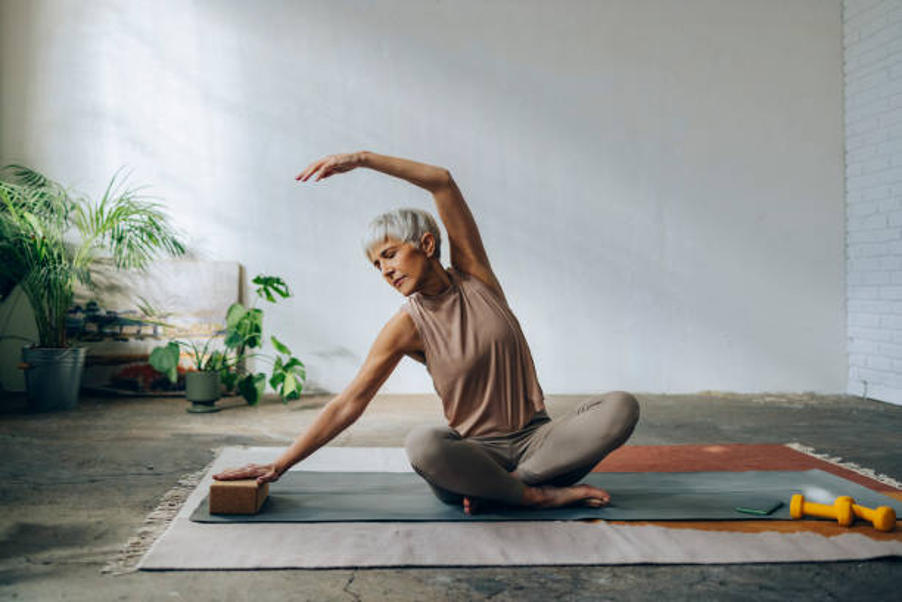
Here is how you can become more flexible and resilient, therefore, psychologically flexible.
#1: Learn how to stay grounded
At first sight, it seems like staying present in the moment has nothing to do with psychological flexibility. But, honestly, how can you solve a problem if you’re dealing with raced thoughts and overwhelming emotions that cloud your judgement? You definitely need some laser-focused attention, hence, mindfulness aka present-moment awareness.
Meditate
Meditation helps calm the amygdala (your brain’s threat response center) and strengthen the prefrontal cortex (the brain’s center for reasoning and decision-making). As a beginner, you can effortlessly build consistency without pressure with the help of apps like Insight Timer or Calm.
Do body scans
This is where you mentally ‘scan’ your body from head to toe, trying to notice any tension or discomfort. Commonly, one performs the practice lying on the back with closed eyes. Also, body scans can be performed as a part of meditation.
Practice a 5-4-3-2-1 exercise
This is where you engage all the senses to ground yourself. The technique is simple: name 5 things you see, 4 things you feel, 3 things you hear, 2 things you smell, and 1 thing you taste.
Try mental health walks
Walks in nature (a green park counts too) reduces activity in the brain’s “default mode network,” which is associated with self-criticism and overthinking. Aim for 30 minutes at least and focus on your surroundings while walking.
#2: Learn to accept things as they are
Yes, we know, easier said than done. But that’s the thing — psychological flexibility is when you radically accept things you can’t change and focus on things you can. It’s when the wisdom inside you tells you that you can’t control most of the things in this world. Reading the Liven app review can be a reminder of how others practice this shift toward acceptance and focus.
- Recognize your emotions. You may be angry, frustrated, upset, and that’s okay. No need to judge that first response that comes from your nervous system;
- Let yourself feel. Don’t suppress your emotions — let them flow;
- Recognize what you can’t change. It’s not easy and it takes time. Sometimes, if you’re dealing with deep unbearable feelings (for instance, you’ve lost someone), you might need help from a therapist, and that’s also okay;
- Find out how you can influence the state of things and take action. Make positive changes within your control and ask for help if needed.
#3: Reframe your thoughts
No, it’s not toxic positivity when you’ve given yourself permission to be angry over the lost job opportunity and then decided to smile because now you can start looking for a better job. It’s called resilience and self-regulation.
Look for the silver lining or learning opportunity
Our human brains love focusing on negative things as they’ve been designed to identify danger and help us survive. However, the impending gloom surely doesn’t benefit you all the time. Instead, ask yourself, ‘What can I learn from this?’
Avoid all-or-nothing thinking
Having this type of mentality leaves you no choice but to feel that the world is an unfair place and you’re the victim that can change nothing. Instead of thinking, “I failed this job interview, so I’m a failure,” reframe to, “This interview didn’t work out, but I can prepare better for the next one.”
Have self-compassion
No one gets everything right all the time, despite what you were pre-conditioned to believe by social media. There is no such thing as ‘mistakes’ — there is only ‘experience’ that teaches you new things, sometimes not in the most pleasant way.
#4: Practice gratitude
You’re luckier than 50% of the world if you can afford to live on more than $10 a day. We’re not trying to shame you here — we all have the right to complain and worry about the most insignificant things. It’s just that sometimes we’re so absorbed in our own worries that we pay no attention to our privileges and blessings.

- Keep a daily gratitude journal and jot down 3 things you’re grateful for everyday;
- Thank others in your life more often;
- Reframe challenges. Think of how past difficulties helped you grow or what they taught you.
#5: Try new things
Open-mindedness is a cornerstone of psychological flexibility, since new experiences expand your perspective and help you adapt to change more easily.
Some people are naturally more open-minded and willing to accept new ideas and try new things, while for others, open mindedness is a skill to develop.
Here are some practices associated with open-mindedness:
- Pick up a new hobby like cooking, photography, gardening, or painting to get outside your comfort zone;
- Meet people from different cultures and surround yourself with people whose mindsets differ from yours. You need someone to challenge your beliefs from time to time;
- Try ‘micro-adventures.’ Take a new route to work or rearrange your workplace.
Final thoughts
Bend, don’t break. Life happens and it’s impossible to not overstress. However, with enough psychological flexibility, you can adapt, recover, and keep moving forward no matter the storm.
Start with one skill from this list, build up, and stay curious.
You’ve got this! 💚
 The Lit Bitch