Trips Inspired by Books and Films: How Stories Can Lead You Somewhere Real
Meta description: Some of the most memorable trips begin not with a destination in mind but with a book or a film. Here is why literary and cinematic travel works, where to go, and how to make the most of a journey inspired by storytelling.
There is a particular kind of wanderlust that does not begin with a travel article or a friend’s recommendation or a flight deal landing in your inbox. It begins with a page or a screen. A description of light falling on a particular city at a particular hour. A landscape so vividly rendered that you can feel the temperature of the air. A way of life in a place you had never seriously considered visiting that suddenly seems, for reasons you cannot entirely articulate, like somewhere you need to go.
Trips inspired by books and films occupy a special category of travel experience. They arrive pre-loaded with emotional investment — you already care about the place before you have set foot in it, already carry images and associations and expectations that no standard destination research can replicate. That pre-existing relationship with a location is both the greatest gift and the most significant challenge of literary and cinematic travel. Getting the balance right is what separates a deeply rewarding journey from a mildly disappointing pilgrimage.
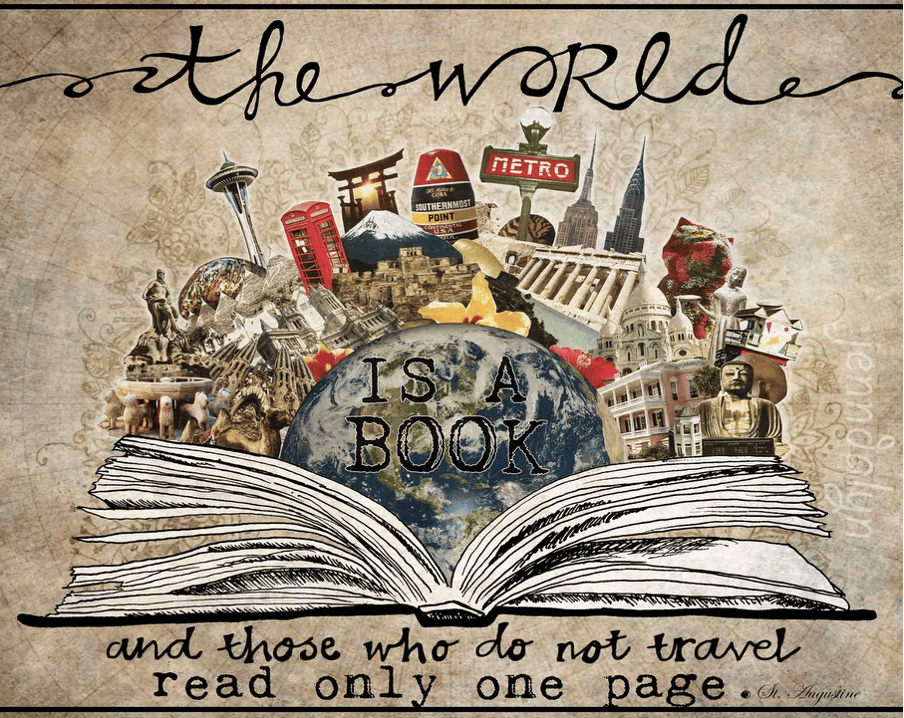
Why Stories Make Better Travel Guides Than Guidebooks
A guidebook tells you what is there. A novel or a film shows you what it feels like to be there — and that distinction, while it sounds modest, produces a fundamentally different quality of attention when you arrive.
Kazuo Ishiguro’s The Remains of the Day turns the English countryside into something melancholy and beautiful and morally weighted in ways that no tourism board copy could achieve. Reading it before driving through Oxfordshire or the Wiltshire villages that inspired its landscape changes what you notice, what you feel, and what the journey means. The buildings are the same, but much like how a well-framed incentive — even something as transactional-sounding as a Slotozen Casino no deposit bonus codes — can shift perception of an experience, your relationship with them becomes entirely different.
This is what stories do that conventional travel research cannot: they create interpretive frameworks. They give you a lens. When Peter Mayle’s A Year in Provence sparked a generation of visitors to the Luberon valley in the 1980s and 1990s, they were not going to see lavender fields and stone villages — those existed for anyone willing to consult an atlas. They were going to inhabit, however briefly, the particular version of Provençal life that Mayle had made vivid and desirable and somehow personally relevant to people who had never been within a thousand miles of it.
The emotional preparation that a well-loved book or film provides is, in travel terms, remarkably powerful. You arrive curious in a specific way, attentive to specific things, oriented toward a specific quality of experience. That orientation shapes what you find.
Literary Destinations Worth the Journey
The canonical literary travel destinations are well-documented for good reason — the connection between place and text in these cases is deep enough to justify a journey specifically organised around it.
Dublin remains one of the world’s great literary cities, and James Joyce’s presence in it is inescapable in the best possible sense. Walking the routes of Ulysses through the city — Sandymount Strand, Davy Byrne’s pub on Duke Street, the Martello tower at Sandycove that opens the novel — is an experience that rewards the reader who has done the preparation and surprises even those who have not. The city has absorbed its literary identity so completely that engaging with it feels like reading and travelling simultaneously.
Edinburgh offers a different but equally rich literary landscape. The Old Town’s closes and wynds provided Robert Louis Stevenson with the atmospheric material for his darker fiction, and Ian Rankin’s Inspector Rebus novels have mapped a contemporary version of the city so thoroughly that readers arrive with a detailed mental geography already in place. The Rebus tours that operate through the city are genuinely worthwhile — not as tourist attractions but as guided readings of a place through the eyes of someone who has looked at it with extraordinary sustained attention.
Tangier occupies a unique position in the literary travel imagination. Paul Bowles lived there for decades and drew the city into The Sheltering Sky with an intensity that makes reading the novel and visiting the Medina feel like parallel acts. The light, the heat, the specific quality of displacement that the city produces in visitors — Bowles captured something true about the place, and it has not entirely disappeared despite the decades since.
For those whose appetite runs toward the contemporary, Hanya Yanagihara’s A Little Life is set in a New York that is specific enough to walk through, and Colm Tóibín’s Brooklyn makes County Wexford and 1950s New York exist simultaneously in a way that sends readers to both.
Cinematic Travel: When the Screen Becomes a Map
Film creates a different but equally compelling kind of destination attachment. The landscape cinematography of certain films does for geography what the best travel writing does for daily life — it renders a place in such specific and beautiful terms that the desire to stand in it becomes almost physical.
New Zealand’s transformation into a global travel destination following Peter Jackson’s Lord of the Rings trilogy is the most commercially significant example of cinematic travel in recent history. The Hobbiton set in Matamata, the Tongariro National Park landscapes used for Mordor, the Fiordland scenery of Milford Sound — all of these became pilgrimage sites for an audience that numbered in the hundreds of millions. The country’s tourism authority understood what had happened and built an entire destination brand around it. The visitors who arrived expecting to find Middle-earth discovered instead that New Zealand’s actual landscape was extraordinary enough to justify the journey entirely on its own terms.
Kyoto’s global profile in travel culture owes something significant to how Japanese cinema — and later Western films set in Japan — has rendered the city’s temples, gardens, and seasonal light. Arriving in Kyoto having watched Hirokazu Kore-eda’s films, or having read Memoirs of a Geisha regardless of its complex relationship with the city’s actual history, produces a visitor who is already paying a particular kind of attention.
Provence returns here as well — Ridley Scott’s A Good Year, adapted from Peter Mayle’s novel, sent a new wave of visitors to the Luberon two decades after the book had done the same. The village of Ménerbes, the vineyards, the afternoon light — the film made an argument for a particular quality of life that a significant number of viewers found persuasive enough to act on.
How to Travel Well When a Story Has Sent You There
The practical challenge of literary and cinematic travel is managing the relationship between the version of a place that exists in the work and the version that exists in reality. Those two versions are never identical, and the gap between them can produce either disappointment or discovery depending on how you approach it.
The travellers who get most from story-inspired journeys are those who treat the source material as a starting point rather than a script. The goal is not to recreate what you read or watched but to use it as a key — something that unlocks a quality of attention that independent discovery might not have produced. You are not looking for the film set. You are looking for whatever the filmmaker saw that made them choose this place over every other.
Going beyond the obvious sites matters. The locations most directly associated with famous works are also the most visited, which can work against the quality of experience that drew you there in the first place. The traveller who reads Captain Corelli’s Mandolin and goes to Kefalonia should certainly visit Fiskardo — but should also spend time in the villages that do not appear in any tour itinerary, where the light and the pace of life that De Bernières responded to still exist undisturbed by the pilgrimage it inspired.
Reading around the primary text enriches the journey considerably. A novelist who set work in a city almost certainly read other writers who set work there. Following those references — reading what your author read, seeing what shaped their vision of the place — builds a layered relationship with a destination that single-source travel cannot produce.
Finally, leave room for the place to surprise you with something the book or film did not prepare you for. The best outcome of a story-inspired trip is not finding exactly what you expected. It is finding something better — something that sends you back to the source material with new eyes, and back to the map with new questions.
Has a book or film ever sent you somewhere unexpected? Share your story in the comments, and pass this article on to any fellow reader or film lover with a passport and an open calendar.