Why Reading Is the Best Thing You Can Do for Your Brain — and How to Make It a Habit
Reading is one of the most powerful things you can do for your brain — yet more and more people find it difficult to start a book at all, let alone finish one. This article explores why reading is so valuable, and how to turn it into a genuine habit.
There is a difference between knowing that something is good for you and actually doing it. We all know that exercise matters, that eating vegetables is better than crisps, that sleep is not a luxury. And yet. The gap between knowledge and behaviour is one of the most studied phenomena in the behavioural sciences — and it is nowhere more visible than in our relationship with reading.
Almost everyone who does not read regularly says they would like to. Almost everyone who does read regularly says it is one of the most valuable habits in their life. And yet the average number of books read per year is declining in most Western countries — whilst average screen time consistently rises.
The question is not whether reading is good for you. It is, demonstrably and on multiple levels. The question is how to bridge the gap between intention and habit — how to go from someone who wants to read to someone who reads.
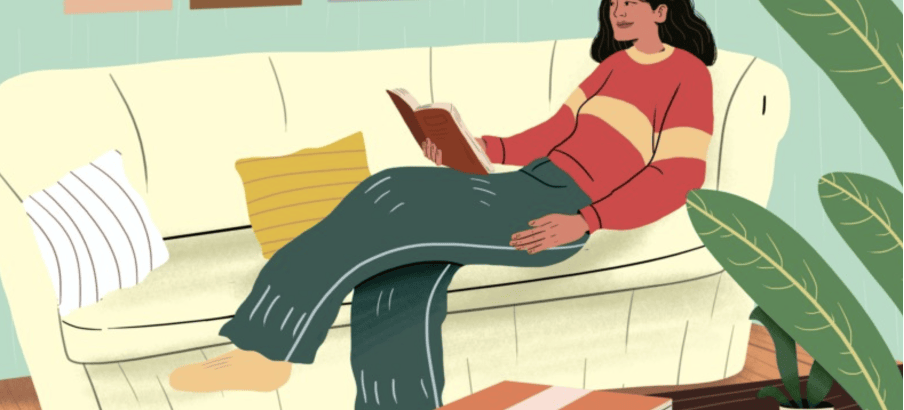
What Reading Does to the Brain
The neuroscientific literature on the effects of reading is extensive and consistent. Reading — particularly literary fiction — activates brain regions involved in empathy, social reasoning, and perspective-taking in ways that other media do not match. When you read about someone’s inner life, their thoughts and feelings, their perception of the world, you use the same neural systems you would use to actually have those experiences.
This explains one of the most commonly reported effects of regular reading: the strengthening of the capacity for empathy. People who read a great deal score higher on average in theory-of-mind tasks — the ability to understand that others have thoughts, feelings, and perspectives that differ from your own. That is a skill with direct value, in relationships, in the workplace, and in public life.
Reading also strengthens focused attention — the ability to stay with a single thought or story for an extended period. That is precisely the skill that is actively undermined by the fragmented media environment of social media and notification-driven screens. The brain that reads regularly trains its concentration muscle. The brain that does not, loses it. In a digital culture where everything is designed to prompt immediate interaction — from endless notifications to platforms offering frictionless access to entertainment — sustained attention is becoming increasingly rare and therefore all the more valuable.
There is also a long-term effect that is less frequently discussed. Research suggests that regular reading throughout one’s life is associated with a lower likelihood of cognitive decline in old age. The brain accustomed to complex narrative structures, shifting perspectives, and rich language remains flexible for longer. In this respect, reading is also an investment in who you will be later in life.
In the short term, the effect on stress is remarkably well documented. A 2009 study from the University of Sussex found that six minutes of reading lowered heart rate and reduced muscle tension by 68 per cent — more so than listening to music, drinking tea, or going for a walk. The mechanism is not fully understood, but the hypothesis is that reading absorbs the mind so completely that it interrupts rumination. The story occupies the space that worries would otherwise fill.
The Concentration Paradox
Many people who give up on reading report the same problem: they cannot concentrate. They read a page, notice their thoughts wandering, read the same page again, and give up. The book goes back on the pile.
This problem is real, but it is not a character flaw. It is the predictable consequence of a media habit that draws on concentration rather than building it. The average person checks their phone multiple times per hour. Social media is designed to deliver attention in small portions — scroll, like, move on, scroll. The brain grows accustomed to this pattern, and when asked to maintain a longer, linear span of attention, it resists.
The solution is simultaneously simple and difficult: practice. Concentration is a muscle that atrophies without use and strengthens with it. The first weeks of regular reading are difficult for most people. Attention wanders, the rhythm refuses to come. But consistency produces results. After a few weeks, most people find they can read for longer without effort — not because they have acquired more willpower, but because the brain has adapted.
It also helps to design the environment for success: phone in another room, a fixed time and place for reading, and beginning with shorter sessions — twenty minutes — rather than trying to sit for an hour when you are not yet used to it. Short sessions repeated consistently build the habit more quickly than sporadic marathons.
In a digital culture where everything is designed to prompt immediate interaction — from endless notifications to platforms such as Revery Play inloggen that offer frictionless access to entertainment — sustained attention is becoming increasingly rare and therefore all the more valuable.
Research into habit formation shows that linking a new habit to an existing moment — so-called habit stacking — considerably increases the likelihood of persisting. Reading just before bed works well for many people, partly because screen use before sleep worsens sleep quality, and replacing it with a book therefore offers two benefits at once. Others opt for public transport, the lunch break, or the first coffee of the morning. The moment matters less than the consistency with which you maintain it.
How to Find the Right Book
One of the most underestimated obstacles to reading is the wrong book — the one you begin because it appeared on a list, or because someone else recommended it, or because you feel you ought to read it. The book that reminds you of your obligations as you read it.
The truth is that for every moment in your life there exists a book that is exactly right — one that connects with what occupies you, what fascinates you, what pace and language appeal to you at this particular time. Finding that book is a matter of experimentation and honesty.
Give a book fifty pages. If it does not work by then, put it down without guilt. Life is too short for books you do not want to read, and the guilt over unfinished books is one of the greatest demotivators for potential readers. There is no reading police. There is only the book and you, and the question of whether the two of you suit each other at this moment.
The same logic applies to skimming and rereading. If after twenty pages you realise you have retained nothing because you were not present, that is not a reason to try harder. It is a signal to put the book down and try another — or to return to it at a different time. Reading does not work like a task you push through — it works like an invitation you either accept or postpone.
Genres as a Way In
For people who find it difficult to establish a reading habit, thinking in terms of genre is useful — not as a pigeonhole, but as a gateway.
Thrillers and crime novels are excellent entry-point genres for people who do not consider themselves readers. Above all, they are well-constructed stories that pull the reader forwards. The same is true of fantasy and science fiction — genres that at their best build complex worlds and explore nuanced themes with a narrative drive that literary fiction does not always possess.
Non-fiction, essay collections, and memoirs work well for people who struggle with fiction. They feel more concrete, the information is direct, and the structure is less dependent on a willingness to believe in a world that does not exist. For many people, a good non-fiction book on a subject that genuinely interests them is the easiest way into regular reading.
The genre you read matters less than the fact that you read. The cognitive benefits of regular reading are not reserved for literary fiction or the classics. They are the result of the habit itself — of the concentration, the imagination, the language, the repetition.
A practical tip for those who do not know where to begin: ask someone you trust, whose taste you know at least a little, to recommend one book — not the best, not the most impressive, but the one that gave them something at a specific moment in their life. Personal recommendations have a success rate that no algorithm can match, precisely because they carry context that a list does not.
Reading as Investment, Not Achievement
The greatest misconception people hold about reading is treating it as an achievement to be delivered, rather than an activity that has value in the doing itself.
How many books you read per year is irrelevant. Whether you finish the books you start is irrelevant. Whether you read the books others find impressive is irrelevant. What matters is this: do you sit regularly with a book, and does it give you something — pleasure, insight, imagination, calm?
If the answer is yes, you are doing it right. If the answer is no, it is the wrong book or the wrong moment. There are other books and other moments.
Reading as a habit, built over years and decades, is one of the most demonstrably valuable investments in your own intellect, empathy, and mental health that is available to you. It costs nothing but time. The library is free. The books are there. All that is needed is to begin — and then, the next day, to begin again.