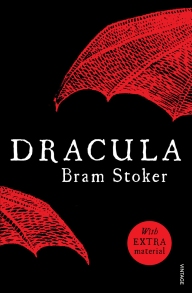
Review: Dracula by Bram Stoker

I finally finished reading the PadWorx interactive e-book (Bram Stoker’s Dracula) and can I just say, it was amazing. I have read Dracula before so I love the story but the interactive book added a whole new element.

Lately bloggers and the media have been talking about e-readers and e-books, some have suggested that e-books and readers will soon dominate the market. When I got my iPad I knew that I could download books for it but I never dreamed that I would have a hard time going back to a paperback book. Having books at my fingertips is wonderful, and when there are books like this one by PadWorx it’s hard to go back to a regular book.

When I first saw the App for Dracula I thought it was going to be a little cheesy and for $5.00 I thought it was on the ‘expensive’ side specially when I can download just the text version for free…..however the App quickly changed my mind.

For those of you who have read Dracula know that it is a long book though it reads quickly because it is an epistolary novel (a book written in letter or journal form). However, there are times that the novel itself drags a bit and sometimes it can be difficult to follow. When I first read Dracula I had a hard time figuring out what was going on until about 100 pages in, then it finally made sense. With the interactive version, it does help the reader follow a long better. Continue reading “Review: Dracula by Bram Stoker”

Review: Jane Eyre by Charlotte Bronte

Jane Eyre is one of my favorite books of all time. I read the novel when I was in high school and then again sometime in between high school and college.

The Bronte sisters were clearly more ‘wild’ and passionate in their love stories (one of my fav books is Wuthering Heights) than Jane Austen.

I admired Jane’s sprit, especially when she totally called her aunt on the carpet about being more or less an evil, cold-hearted bitch to her. Jane was witty, charming, and above all strong. She really is the ideal woman both modernly and historically speaking. She stands up for herself and perseveres through difficulties and ultimately succeeds in her goal- wining Rochester’s heart and hand.

Jane Eyre’s tale was like the original prototype for job place sexual harassment and how NOT to have an office affair. I mean really…..hooking up with you much older, married, boss…..ya never a good idea no matter what century you are in! Continue reading “Review: Jane Eyre by Charlotte Bronte”

Review: Drood by Dan Simmons

I recently picked up this book (Drood by Dan Simmons) in anticipation for Halloween. I wanted to read something that was scary and suspenseful with a historic Victorian London flair. This book started as a generally promising suspense/horror story but ended up being a huge disappointment. I’ll admit when I first started it I was completely hooked and into it but sadly as the weeks went by I had to force myself to finish it.

The book is written from the famous English author Wilkie Collins (famous works include The Woman in White and The Moonstone) perspective. Collins often collaborated with the famous Charles Dickens in real life. The witty humor which the Collin’s character brings to the novel is great, I often found myself LOL-ing all over the place and I especially loved the ‘Other Wilkie’ interaction (or lack there of) throughout the novel.

Simmons definitely nailed the Victorian writing style which added a sense of authenticity to the story as his sentences were long, wordy, and with a flair for the eccentric. He also seemed to really ‘get’ Collins’ character and used lots of Gothic fiction elements (ghosts, psychological breakdown, impending doom, drug use etc).

Simmons does a fantastic job recreating a gritty, dirty, creepy, horrifying turn of the century London. When Dickens and Collins venture out into the city slums looking for Drood, the imagery and description is by far one of the best I have read. I really felt like I was there walking right a long side Collins. The suspense and psychological cluster (*(^ that follows though it a little hard to sort out. Continue reading “Review: Drood by Dan Simmons”

Review: The Adventures of Sherlock Holmes by Sir Arthur Conan Doyle

I have just finished The Adventures of Sherlock Holmes which actually went pretty fast compared to the four novels I read earlier. This collection of short stories was a fun fast read which satisfied my need to read but I did not feel committed to an entire long novel however after the first five short stories I found myself wondering if I was simply re-reading the same story over and over again?

Every short story seemed to follow the same pattern, a client came to see Holmes, he enlisted Watson’s help, Holmes found some small detail in the client’s story that no one else could and made it look easy and eventually he solved the case.

Holmes does have his moments of humor but overall his character seems a little underdeveloped for me. Perhaps when I finish the entire book series he will develop more but really he seems flat.

The one question I kept coming back to throughout this collection was it’s lack of unoriginality. I am sure for most Victorian era readers this was considered very very very fantastic writing and very visionary so I tried to keep that in mind as I read….for the period it was SHOCKINGLY good and different. So I suppose one must not look too far into the essence of the characters and plot line as it much of it is period related but it does get old after a while….I suppose that is why these were published in magazines etc.

Watson starts almost every story with some sort of preface like ‘blah blah blah of all the cases Holmes and I worked together none amazes me more than blah blah blah (I’m paraphrasing horribly here)’ and then he launches into the case. Watson must not get out much or else he has a very bad memory because to him EVERYTHING is amazing!

This leads me to the one question not answered by the books yet…..why DOES Watson start documenting their adventures in the first place? Continue reading “Review: The Adventures of Sherlock Holmes by Sir Arthur Conan Doyle”

Review: The Valley of Fear (A Sherlock Holmes Novel) by Sir Arthur Conan Doyle

As most of you know, I am finishing up the last of the four novels of Sherlock Holmes (A Study in Scarlet, The Sign of Four, and The Hound of Baskervilles being the first three) titled The Valley of Fear.

The first three novels were a little hit and miss for me. All of the first three novels that I read were a little on the long-ish and boring side, except for the various forensic science methods/techniques and the short lived love story between Mary and Dr. Watson. So I was totally hoping The Valley of Fear (VOF) was going to be more promising, sadly I was a little on the disappointed side.

I started noticing a formula/pattern to Doyle’s writing pretty early on as most of the stories begin with a little background on Holmes’ “deduction” methods and a set up from the client via Dr. Watson’s narrative. Holmes often does not disclose his theories until late in the story while the audience (like Watson) is forced to try and make heads or tails of the facts. While some find the predictable plot boring, there is some comfort in knowing what to expect.

Obviously the series came out at a time when science, psychology, and industrial advancement were at a pinnacle. Holmes must have been a wildly popular character as he is colorful and interesting…..plus people just naturally have a morbid curiosity about murder and crime….admit it, you know you watch The First 48, Forensic Files, and Cold Case just as much as the next person!

So as I read VOF, I began wondering why the same formula over and over again….I came up with a couple of different possibilities. Like Holmes I have deduced this from the novels: the crime and criminal have not changed; only the style and the way the story is told.

Like A Study in Scarlet, VOF contains a fairly long narrative and background on the murderer. Clearly the focus of the novel is criminal psychology or the proverbial “why” of the crime. Science can easily explain the “how” of the crime but not necessarily the why. The why of a crime/murder is often incomprehensible to a normal person however, society demands an answer, a reason, a why.

Holmes as a character speaks for Victorian society and is clearly a product of that environment. Victorian society is focused on logic, science, and discouraged fantastical ideas. For example, in the Hounds of Baskervilles, the mysterious dog on the moors had to be explained away by logic, it could never be a ghost or phantom…..always a logical explanation. Continue reading “Review: The Valley of Fear (A Sherlock Holmes Novel) by Sir Arthur Conan Doyle”